The quality of a color MDF board is determined by more than its final color. Substrate preparation, fiber distribution, adhesive performance, hot pressing, surface treatment, and finishing control all contribute to the finished panel's appearance and functional properties. For manufacturers serving furniture, cabinetry, and interior decoration markets, a stable production process is essential for maintaining consistent quality across different orders and production batches.
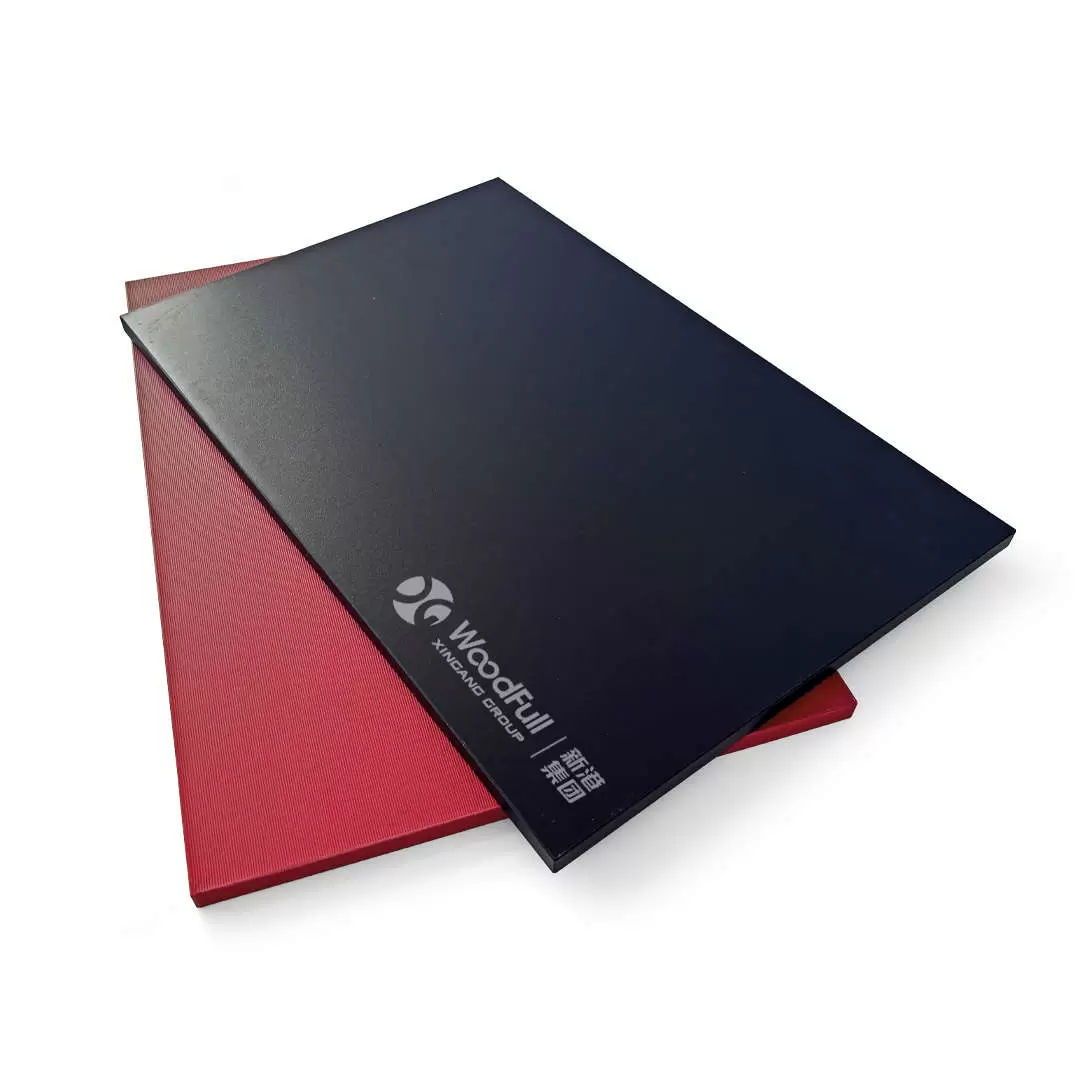
Understanding how color MDF board is manufactured helps buyers evaluate suppliers more effectively. It also provides a clearer basis for identifying potential quality risks before panels enter downstream cutting, drilling, lamination, or furniture assembly operations.
Substrate Preparation: Establishing a Stable Foundation
MDF production begins with wood fiber preparation. The quality and consistency of the fibers influence the internal structure of the finished panel. Fiber dimensions, moisture content, and distribution must be controlled to support uniform board formation.
After fiber preparation, adhesive is introduced to bind the fibers together. The adhesive system influences internal bonding, dimensional stability, and emissions performance. Its compatibility with the manufacturing process is particularly important because variations in adhesive distribution can lead to inconsistent panel properties.
The forming process then distributes the treated fibers into a mat with the required weight and dimensions. Uniform mat formation is important for controlling density distribution and final thickness. Uneven fiber distribution may contribute to differences in mechanical performance across the panel.
For color MDF board production, a stable substrate provides the foundation for subsequent surface processing. Even a visually attractive finish cannot fully compensate for poor internal bonding or inconsistent board structure.
Hot Pressing and Density Control
Hot pressing consolidates the fiber mat into a rigid panel under controlled temperature and pressure. During this stage, heat activates the adhesive system, while pressure establishes the required board thickness and density.
The pressing parameters must be matched to fiber characteristics, adhesive formulation, panel thickness, and production speed. Excessive or insufficient processing can affect internal bonding, surface quality, and dimensional stability.
Density is another important production variable. The overall density of an MDF panel affects its weight, stiffness, machining behavior, and fastener performance. However, the density profile through the board thickness is also relevant. A uniform and appropriate density structure supports more predictable cutting and surface treatment.
After pressing, panels generally undergo conditioning and further processing to stabilize their properties and prepare them for finishing. Sanding may be used to improve surface flatness and create a consistent foundation for decorative treatment.
Color Application and Surface Treatment
The decorative process determines the visible appearance of color MDF board. Depending on the product construction, the color may be achieved through surface coating, decorative facing, or other specialized finishing methods.
Each approach has different requirements.
A coated surface requires appropriate preparation, coating compatibility, and controlled application conditions. Film thickness, curing conditions, and surface cleanliness can affect gloss, adhesion, and visual consistency.
A decorative facing requires reliable bonding between the facing material and the MDF substrate. Adhesive compatibility, pressing conditions, and surface preparation influence whether the finished surface remains stable during storage, machining, and use.
Color control is especially important in large-volume production. Pigment formulation, coating conditions, material batches, and curing processes can all contribute to color variation. Manufacturers should establish reference samples and inspection procedures to maintain consistency.
The selected finish should also reflect the intended application. A matte surface, for example, has different visual and maintenance characteristics from a high-gloss finish. Surface hardness, scratch resistance, stain resistance, and cleaning compatibility should be assessed according to the final environment.
Surface Defects and Quality Control
A color MDF board may look acceptable at a distance but still contain defects that become visible during furniture production or installation. Common issues include scratches, bubbles, pinholes, uneven gloss, color variation, edge damage, and surface contamination.
These defects can originate at different stages. Substrate irregularities may affect coating uniformity, while dust or contamination can interfere with surface adhesion. Improper handling and packaging may also cause scratches after production.
Un sistema di ispezione pratico dovrebbe includere controlli visivi con illuminazione controllata, misurazioni dimensionali, consistenza dello spessore, aspetto superficiale e relativi test di adesione. Laddove il prodotto richieda specifiche caratteristiche di durabilità, è necessario condurre ulteriori test in base all'applicazione prevista.
I test meccanici del substrato MDF possono includere la forza di adesione interna, le proprietà di flessione e le prestazioni di ritiro delle viti. Per le applicazioni sensibili all'umidità, possono essere rilevanti anche i test di rigonfiamento dello spessore e di assorbimento d'acqua.
I test superficiali devono essere selezionati in base alla finitura e ai requisiti del mercato. I test di abrasione, graffio, macchia e adesione possono fornire informazioni utili, ma il metodo di prova applicabile e i criteri di accettazione devono essere concordati prima della produzione.
Perché la tecnologia adesiva è importante
La tecnologia adesiva influenza sia le prestazioni strutturali che il profilo ambientale dei pannelli a base di legno. La formulazione, il metodo di applicazione, il comportamento di polimerizzazione e la compatibilità con i materiali in fibra influiscono tutti sulla stabilità della produzione.
Shandong Xingang Group Co., Ltd. ha sviluppato l'adesivo biomimetico Xingang, che l'azienda descrive come contenente zero formaldeide, zero benzene e zero sostanze nocive. L’adesivo è stato applicato con successo su larga scala nei pannelli decorativi biomimetici Xingang, nell’MDF ultrasottile e nel compensato marino biomimetico.
Questo sviluppo riflette l'attenzione dell'azienda verso materiali a base di legno orientati all'ambiente. Per la produzione di pannelli MDF colorati, tuttavia, l'idoneità di un particolare adesivo deve essere valutata in relazione al substrato effettivo, al processo decorativo e alle prestazioni richieste del prodotto finito.
Le dichiarazioni ambientali dovrebbero inoltre essere supportate da documentazione specifica del prodotto. Gli acquirenti devono richiedere i relativi rapporti sui test sulle emissioni e verificare se il prodotto testato corrisponde all'esatta struttura del pannello acquistato.
Conciliare la qualità della produzione con la lavorazione a valle
Il valore di un pannello MDF colorato diventa chiaro quando entra nella produzione a valle. Un pannello con spessore e densità costanti è più facile da lavorare tramite fresatura CNC, foratura, lavorazione dei bordi e assemblaggio di mobili.
La durabilità della superficie è altrettanto importante. Se una finitura decorativa si graffia facilmente o non viene incollata bene, potrebbero verificarsi danni durante il taglio, l'imballaggio, il trasporto o l'installazione. Pellicole protettive e procedure di manipolazione adeguate possono aiutare a ridurre questi rischi.
Per i progetti di arredamento personalizzati, la produzione di campioni è un modo efficace per valutare il processo completo. Un pannello di prova può essere tagliato, forato, rifinito sui bordi, assemblato e ispezionato prima che venga rilasciato un ordine più grande.
Costruire un processo di fornitura affidabile
A dependable supplier should be able to explain the panel structure, production process, quality inspection methods, and product-specific technical specifications. Buyers should confirm the available dimensions, thickness range, color options, finish types, production tolerances, and packaging standards.
It is also important to understand how the manufacturer controls batch consistency. Approved samples, production records, inspection reports, and clear acceptance criteria can reduce disputes when orders are delivered over multiple shipments.
Color MDF board manufacturing requires coordinated control of substrate formation, adhesive performance, pressing, decorative treatment, and final inspection. When these stages are managed as one integrated process, the resulting panels are better positioned to meet the appearance and processing requirements of modern furniture and interior applications.


